
Case study · Clinical research
Clinical Research Marketing Case Study.How a Tampa Bay research site went from 8 randomizations a year to more than 100, with a rebuilt website, automation and recruitment process.
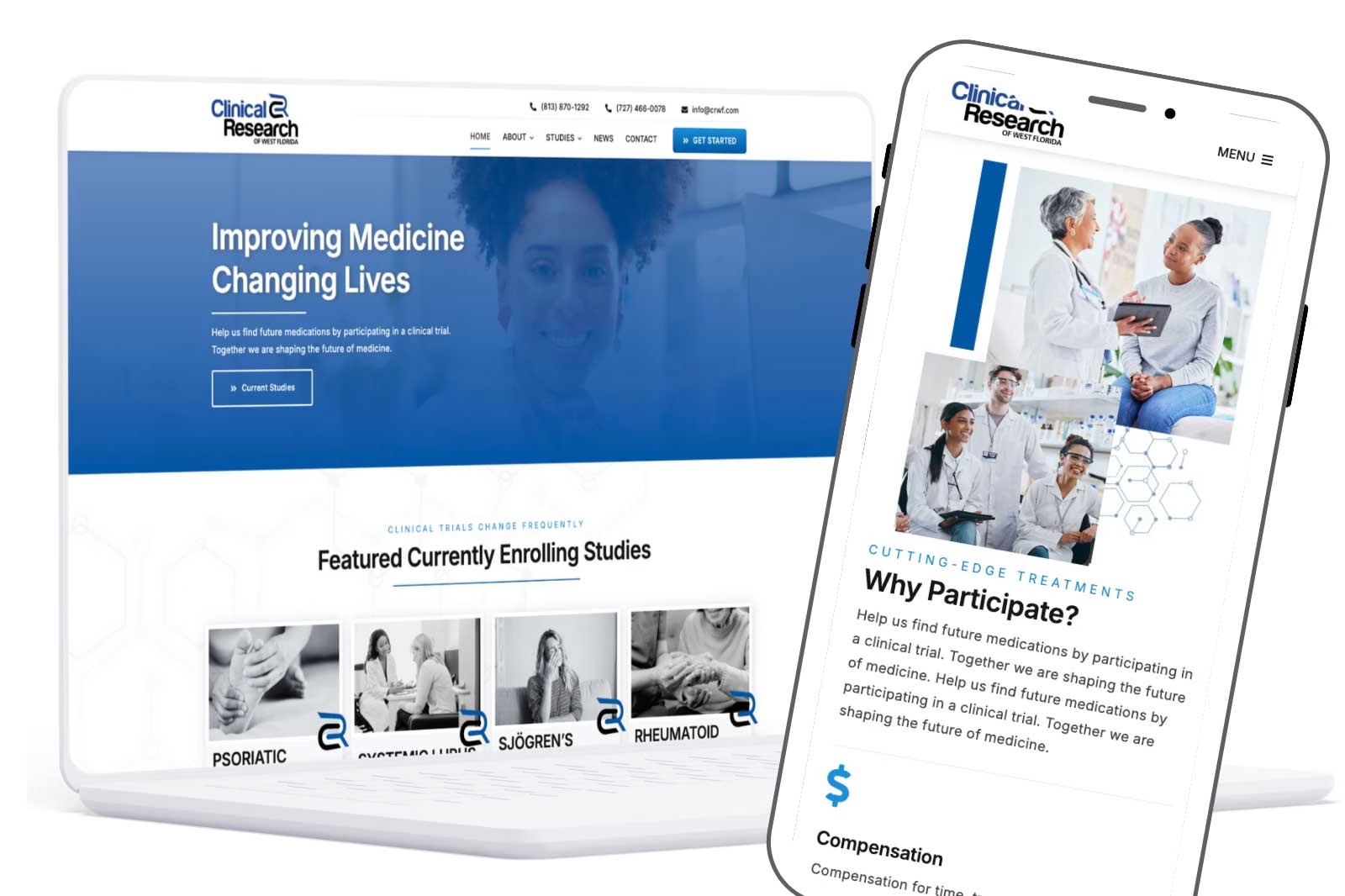
We first worked with this research site in 2015 but never got the chance to run its marketing. It moved through several agencies, and the site averaged 8 randomizations a year. It came back to us in December 2024. Since then we have rebuilt its website and study pages, run its Facebook and Instagram recruitment ads, automated volunteer follow-up and pre-screening, and reworked how its recruitment team handles every inquiry. Every ad and study page still clears sponsor and IRB review before it goes live.
At a glanceClientMulti-site clinical research company in Tampa BayFootprintTwo research sites plus a Phase I unit, 16 condition studies on the siteEngagementDecember 2024–presentOur scopeWebsite and study pages, SEO and content, Facebook and Instagram ads, CRM and pre-screen automation, recruitment team process, ad compliance documents100+randomizations a year10,000+volunteer contacts+65%search clicks
The challenge
Studies to fill, rules on every word.
A clinical research site markets to two audiences at once: patients who might volunteer and sponsors who choose where to place trials. Every patient-facing word has to stay accurate, careful and approved.
01Back after a string of agenciesThe site had tried several agencies since we first met in 2015, and the site averaged 8 randomizations a year. It needed marketing that filled studies, not reports.02Thin study pagesVolunteers want to know what a study involves, who may qualify, what it pays and where it runs. Most condition pages answered few of those questions.03Approval before anything runsEach study’s ads and page copy go to the sponsor and the IRB before launch, and Meta restricts health data on clinical research pages.04Software with no connectorsThe trial management system has no off-the-shelf integration, so any follow-up and pre-screening automation had to be built around it.
Content patients search for
Answer the question first.
Most patients never search for a clinical trial by name. They search for what is new for their condition, whether it runs in families and what the newest treatments are.
So we wrote for those questions. An article on the latest advances in rheumatoid arthritis treatment, which drew no search traffic a year earlier, became the second most-clicked page on the site, with 484 clicks and about 51,000 impressions in one quarter. An article on whether lupus is hereditary earned more than 82,000 impressions in the same quarter.
Many of those readers are living with a condition the site studies. That is the audience a study page needs.
Search clicks by page, July–September 2026Homepage626Rheumatoid arthritis treatment article484Tampa location page377Clearwater location page266Asthma study page211484 clicks in one quarter from one condition article
The AI search result
We wrote for patients’ questions. Now AI answers with this site.
More patients skip the search results and ask ChatGPT, Gemini or Perplexity instead. We track five of their questions every day. The answers name this research site 83% to 100% of the time, and cite its website more than any other source.
Named in83–100%of AI answers, depending on the questionFive patient questions. Three AI platforms. Checked every day.ChatGPTGeminiPerplexity
79/86AI answers named our client across all five patient questions we track.#1Most-cited website in those answers. Its site earned 22% of every citation, more than twice the next source.5 of 6Times ChatGPT listed it first when asked for the best places to join paid clinical trials in Tampa Bay.
Every day, every platformShare of each day’s answers that named our clientPlatformOct 29Oct 30Oct 31Nov 1Nov 2Nov 3ChatGPT100%100%100%100%100%100%Gemini100%100%80%100%100%80%Perplexity80%80%80%80%80%100%100%Named in every answer that day80%Named in 80% of that day’s answers
Source: Visual Realm AI visibility tracking in Screpy. Five patient questions, asked every day in ChatGPT (OpenAI), Gemini (Google) and Perplexity, US English, October 29 to November 3, 2026. 86 answers analyzed; our client was named in 79. Citation share counts every source the three platforms cited in those answers.
What we did
Six pieces of one recruitment system.
Each one was built once and reused for every new study the site took on.
01One template, 16 study pagesEvery study page answers what the study involves, who may qualify, compensation and locations, with an enrollment form on the page.02Structured data for every studyStudy, clinic and physician schema tells search engines and AI answers what each study is, where it runs and who leads it, as part of our generative search work.03Ads split by research siteSeparate Facebook and Instagram campaigns for each location, because both sites need volunteers, with about $267,000 in ad spend managed since April 2025.04Compliance built inWe prepare ad copy in the submission format the IRB already approves, then match the study page to the approved language before a campaign goes live.05Automation and team processEach form opens an application for that study in the CRM, and volunteers get pre-screen questions by text. We reworked how the recruitment team follows up, and more than 10,000 prospective volunteers now sit in a database that carries into the next study.06Content for every conditionArticles on the questions patients ask about their condition, part of an SEO program that grew search clicks 65% year over year.
In their words
“You over promised and over delivered.”
The company’s founder, a few months after the site came back to Visual Realm.
Questions
Clinical research marketing FAQ.
What research sites ask us about recruiting volunteers online.